



ESP32-Based IoT Sensor Node / Development Platform.
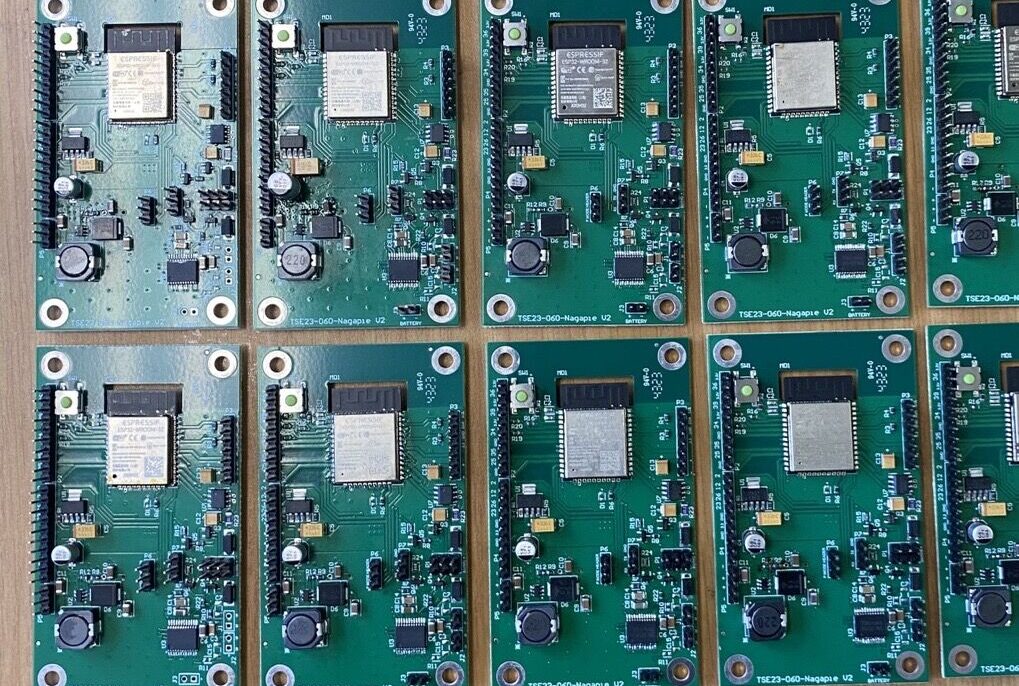
This project is a battery-powered ESP32 IoT sensor node and development platform, designed with exposed GPIOs for sensor integration, a DC-DC converter for efficient power regulation, and dual Wi-Fi/BLE connectivity. Manufactured in 10 units, it serves as a versatile platform for prototyping IoT applications such as environmental monitoring and portable data logging.
- Client Technology Station in Electronics
- Date 25 June 2021
This project showcases the design of a battery-powered IoT sensor node and development platform, built around the ESP32 for dual Wi-Fi and Bluetooth Low Energy (BLE) connectivity. The board was manufactured in a batch of 10 units for evaluation and prototyping. Designed to be compact yet flexible, it allows integration with a wide range of sensors and peripherals through exposed GPIO pins.
Key Features
- ESP32 SoC with Wi-Fi + BLE connectivity for cloud and local communication.
- Battery-Powered Operation with a high-efficiency DC-DC converter for stable system supply.
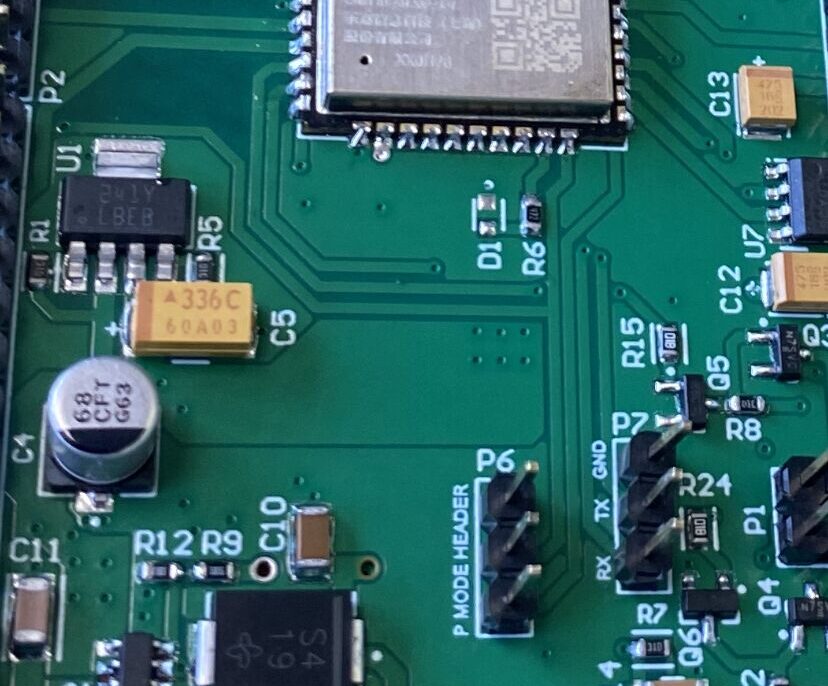
- Exposed GPIO Interfaces to connect sensors, actuators, and other external peripherals.
- Modular Design enabling use in multiple IoT applications (e.g., environmental monitoring, smart home devices, or portable data logging).
- Prototyping & Scalability: Board can be used as both a standalone IoT node or a development platform for further system integration.

My Contribution
- Designed the schematic and multilayer PCB in Altium Designer, optimizing layout for power efficiency and modularity.
- Implemented battery power management and integrated a DC-DC converter to provide stable voltages for ESP32 and connected devices.
- Exposed key GPIO pins for sensor and peripheral interfacing.
- Oversaw manufacturing of 10 prototypes, validating the design from fabrication to functional testing.
- Conducted hardware testing of communication, power management, and GPIO expandability.
Learning Outcome
This project deepened my expertise in embedded IoT hardware design, battery power systems, and modular PCB development. It also demonstrated my ability to design and deliver a small-batch production run of hardware suitable for real-world testing and prototyping.